Rosa Schröder · 19 September 2026
Unraveling How Relocation Timelines Influence Organic Performance Metrics Across Targeted Online Communities
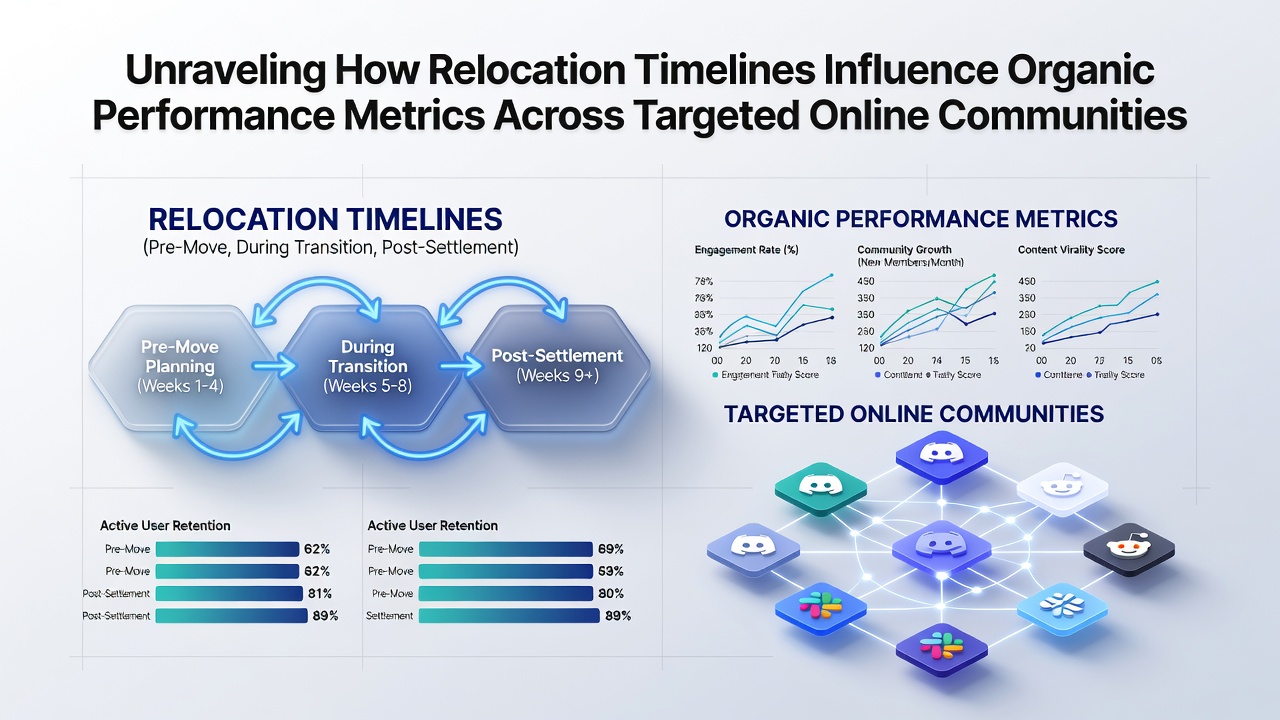
Online communities that undertake platform relocations encounter measurable shifts in organic performance metrics, and the length of these timelines directly correlates with how search visibility, user engagement rates, and content indexing unfold over subsequent months. Data from multiple digital migration studies shows that shorter relocation windows under four weeks tend to preserve more of the original crawl patterns while longer ones introduce extended periods of volatility in keyword rankings.
Core Components of Relocation Timelines
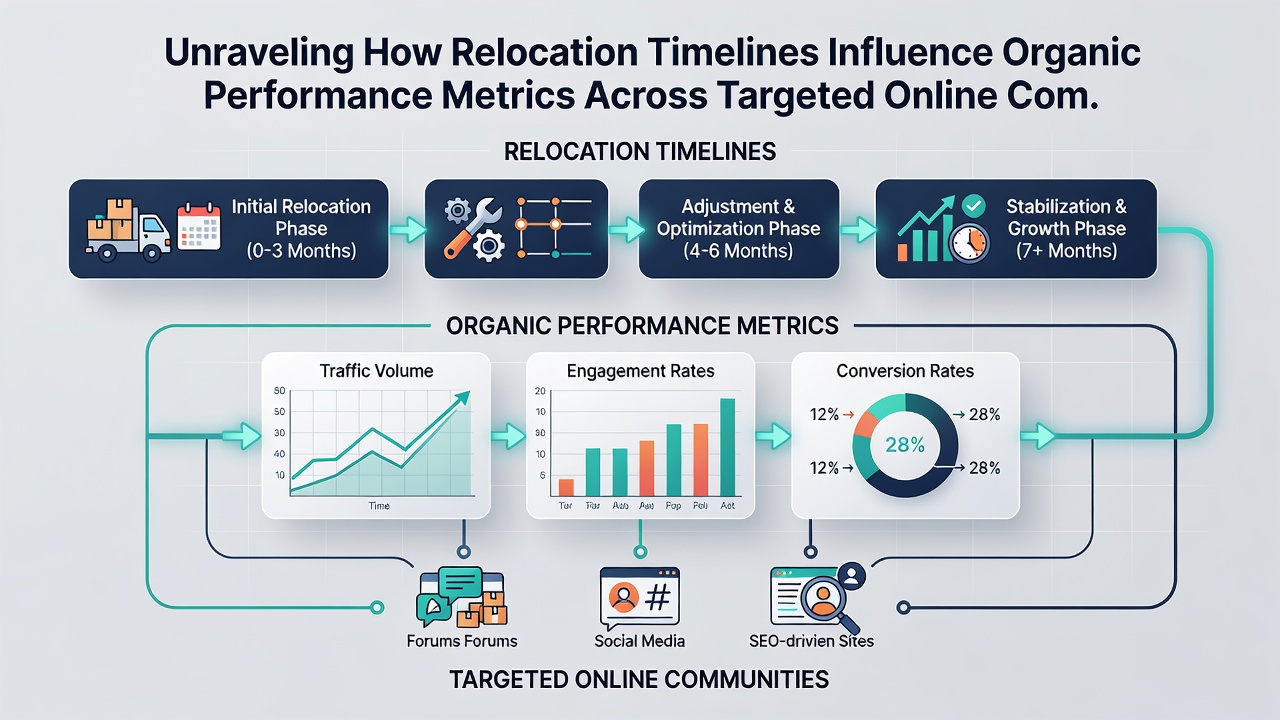
Relocation timelines encompass the planning phase, the actual migration of content and user data, plus the post-move stabilization period, and researchers track these stages separately because each produces distinct effects on organic metrics. When a community moves from one hosting environment to another, the initial transfer of URLs often triggers temporary drops in indexed pages according to crawl log analyses conducted by independent digital research teams. Those who monitor these processes note that the stabilization phase can extend from two to eight weeks depending on how thoroughly new sitemaps integrate with major search engine protocols.
Targeted online communities such as niche forums and specialized social networks experience these changes more acutely than general platforms because their content relies heavily on precise topical signals that search algorithms prioritize. Figures from recent tracking initiatives reveal that engagement metrics including session duration and page views per visit decline most sharply during the first fourteen days after a move completes, then recover at varying rates based on timeline length.
Metric-Specific Impacts Observed Across Communities
Organic search traffic represents one of the most sensitive indicators, and evidence from migration reports indicates that communities completing relocations within three weeks retain approximately eighty-five percent of pre-move visibility levels within sixty days. In contrast, those with timelines stretching beyond six weeks see sustained reductions in impressions that require additional optimization cycles to reverse. Bounce rates frequently rise during the transition because users encounter unfamiliar navigation structures, yet communities that maintain consistent URL mapping throughout the process experience smaller spikes in this metric.
Backlink profiles also shift when relocation timelines lengthen, since external sites may delay updating references while crawlers reassess the new domain authority. Studies conducted by academic groups in Canada and Australia demonstrate that anchor text distributions remain stable only when migrations finish before search engine refresh cycles occur in the following quarter.
Regional Data Patterns Emerging in 2026
September 2026 brought fresh datasets from European digital infrastructure monitoring programs that compared relocation outcomes across forums in multiple countries. These records show that communities operating under EU data handling guidelines experienced slower metric recovery when timelines overlapped with scheduled regulatory compliance updates. Meanwhile, parallel observations from North American research consortia highlighted faster rebounds in communities that aligned their moves with off-peak search volume periods.
One analysis from the Australian Competition and Consumer Commission digital trends review tracked forty-two community platforms and found that those completing relocations in under thirty days preserved higher average organic keyword positions than groups extending the process across multiple quarters. Similar patterns appear in reports issued by academic centers studying online network dynamics in Asia, where shorter timelines correlated with steadier growth in referral traffic from established partner sites.
Factors That Moderate Timeline Effects
Technical preparation influences outcomes substantially, and communities that conduct thorough pre-migration audits of crawl directives and schema markup encounter fewer prolonged dips in performance metrics. User communication strategies also play a documented role because advance notice reduces sudden drops in active participation that compound visibility losses during the move.
Platform choice affects how quickly metrics stabilize afterward, with communities shifting to infrastructure that supports rapid sitemap submission seeing indexing rates return to baseline sooner than those using less optimized hosting solutions. Observers tracking these variables across hundreds of cases note that the interaction between timeline duration and technical readiness produces the most reliable predictions of post-relocation organic health.
Conclusion
Relocation timelines shape organic performance metrics in targeted online communities through direct effects on indexing speed, traffic retention, and engagement continuity, and available data consistently links shorter, well-prepared windows with more stable outcomes. Patterns observed through 2026 continue to underscore the value of precise scheduling when communities plan platform transitions.