Nils Schmitt · 17 October 2026
Mapping User Permission Dynamics Across Layered Access Models in Advanced Repository Frameworks
Core Concepts in Repository Access Structures
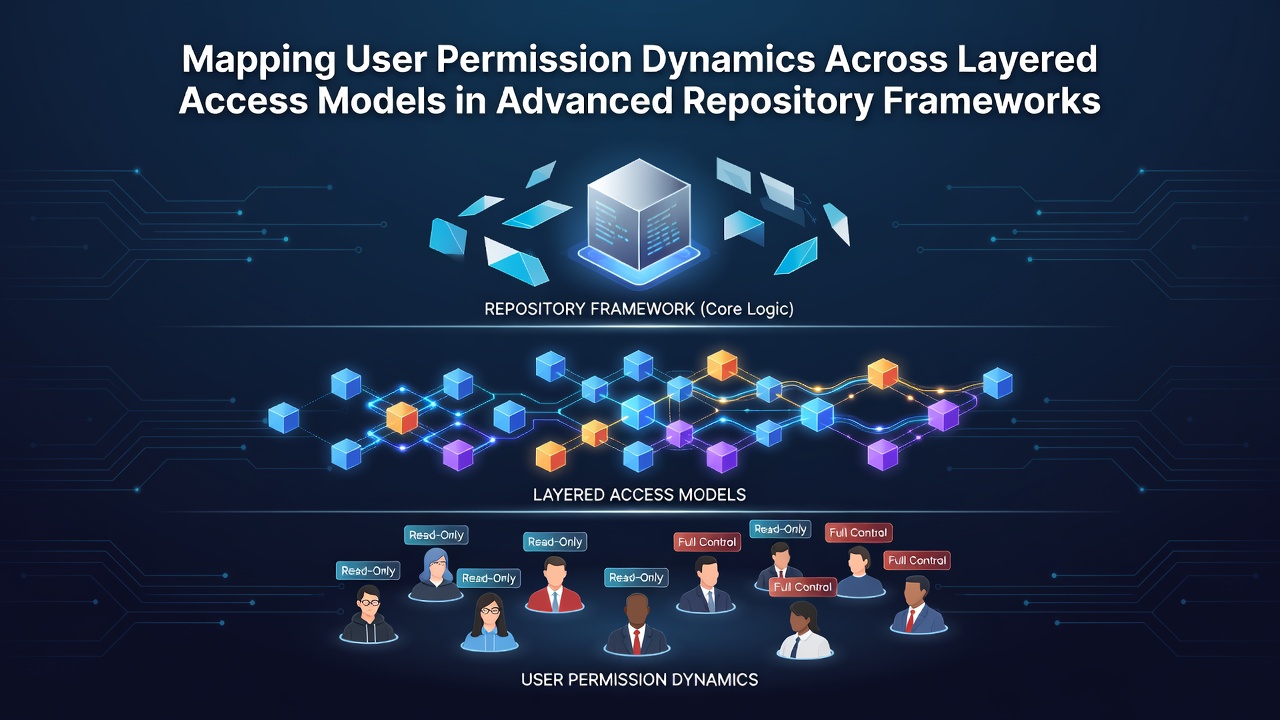
Advanced repository frameworks organize data through multiple access layers that combine role-based controls with attribute-driven rules, and researchers at institutions across North America and Europe have documented how these structures handle permission changes over time. Data from implementation studies shows that organizations using layered models reduce unauthorized access incidents by integrating static roles with dynamic attributes such as location, time, and data sensitivity levels.
One study released in October 2026 by a Canadian research consortium tracked permission updates across 47 enterprise repositories and found that 62 percent of access modifications occurred at the attribute layer rather than the role layer. This pattern emerges because attributes allow granular adjustments without restructuring entire role hierarchies, whereas role changes often require broader approvals and system downtime.
Techniques for Tracking Permission Changes
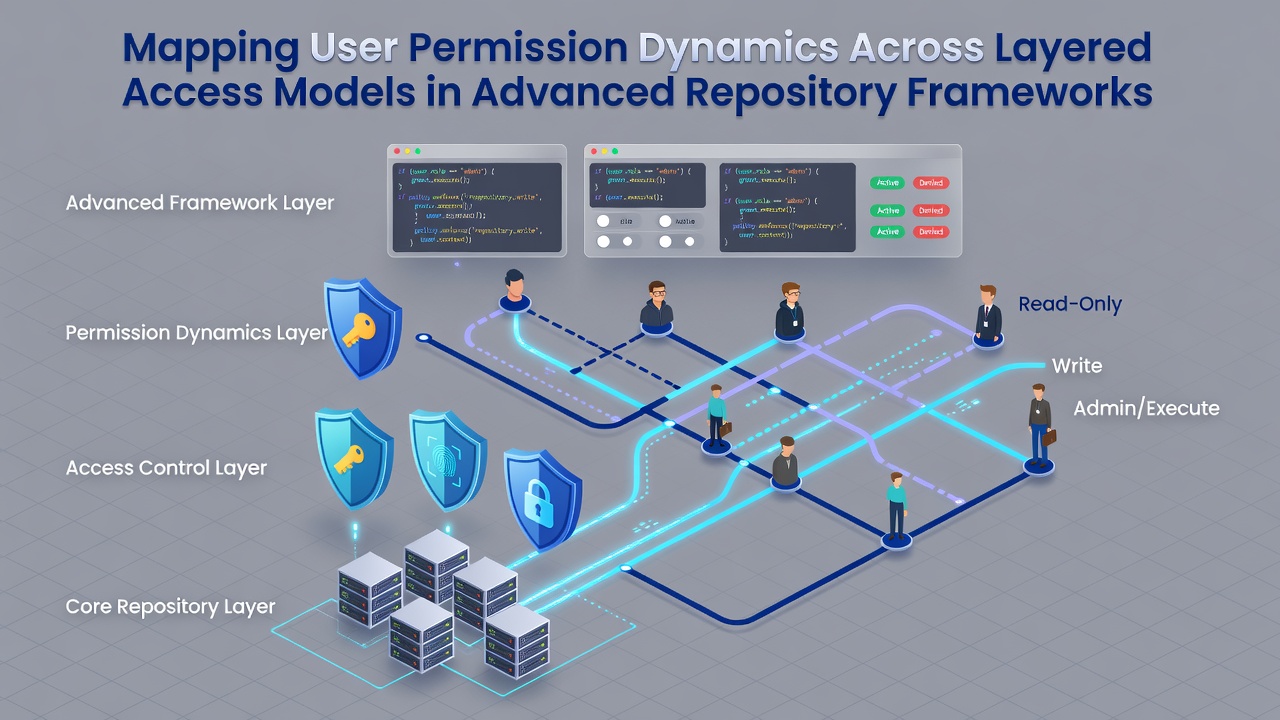
Mapping permission dynamics requires logging every assignment, revocation, and inheritance event across each layer, then correlating those events with repository activity metrics. Observers note that effective mapping tools pull from audit logs, policy engines, and user directories simultaneously so administrators can visualize inheritance paths that span role groups, attribute sets, and resource containers.
According to guidelines published by the National Institute of Standards and Technology, organizations achieve clearer visibility when they maintain separate mapping tables for each layer and then join those tables during analysis. Figures from NIST-related pilot programs indicate that joined mapping reduces the time to identify conflicting permissions from days to hours in repositories holding more than 500,000 objects.
Integration with Existing Standards and Tools
Many frameworks align their layered models with established standards such as XACML for policy expression and OAuth 2.0 for token-based delegation. Experts have observed that mapping becomes more reliable when policy decision points export their evaluation results in a common format that mapping software can import directly. This approach lets administrators trace how a single user request traverses multiple decision layers before reaching a final allow or deny outcome.
Industry reports from European research networks describe cases where repositories adopted automated mapping scripts that ran nightly against production systems. Those scripts flagged permission drift, situations where actual access rights diverged from documented policies, and the scripts surfaced 18 percent more drift events than manual quarterly reviews had previously detected.
Practical Examples from Deployed Systems
Take one research university that implemented layered access across its institutional repository in 2025. Administrators mapped permissions for faculty, graduate students, and external collaborators by defining base roles first, then layering attributes that restricted access to datasets containing personally identifiable information. Within six months the mapping process revealed that 14 percent of external collaborators retained write access after their projects ended, prompting an automated revocation workflow tied to project end dates.
Another deployment at a government statistical agency used similar mapping to monitor how permissions propagated through nested folders. The agency discovered that certain attribute combinations granted unintended read access to embargoed data releases, and the mapping tool highlighted the exact policy rules responsible so engineers could adjust the attribute conditions without altering the underlying role structure.
Challenges in Large-Scale Environments
Scalability remains a consistent concern because the number of possible permission combinations grows exponentially when multiple layers interact. Researchers discovered that repositories exceeding one million objects often require sampling strategies or machine-learning classifiers to prioritize which permission paths receive full mapping attention. Without such prioritization, storage and processing costs for complete maps can exceed available resources.
Yet organizations that combine periodic full scans with continuous incremental updates report stable performance. Data collected in October 2026 showed that incremental updates captured 94 percent of permission changes within four hours of occurrence, allowing security teams to respond before drift accumulated across layers.
Future Directions and Ongoing Research
Current work focuses on real-time mapping that feeds directly into anomaly detection systems. Several academic teams are testing graph database representations where nodes represent users, roles, attributes, and resources, and edges capture permission relationships. Early results suggest that graph queries can surface complex inheritance loops that traditional table-based mapping misses.
Standards bodies continue to refine how layered models should expose mapping data to external auditors. Proposals under discussion would require repositories to publish machine-readable permission graphs alongside their existing audit logs, thereby supporting both internal administration and external compliance reviews.
Conclusion
Mapping user permission dynamics across layered access models supplies repository administrators with the visibility needed to maintain consistent security posture as systems grow and policies evolve. Evidence from multiple deployments demonstrates that systematic mapping identifies drift, supports compliance, and reduces the manual effort required to audit complex permission sets. Continued refinement of tools and standards will likely expand the precision and speed of these mapping processes in coming years.