Rosa Meier · 3 October 2026
Examining Searcher Navigation Patterns Within Reorganized Digital Collections During Platform Consolidation
Platform consolidation continues to reshape how digital collections organize their holdings, and searcher navigation patterns shift accordingly as interfaces merge and metadata schemas align across previously separate repositories. Researchers tracking these changes note that users encounter new pathways through unified search interfaces while older collection boundaries dissolve during the integration process. Data collected through October 2026 shows increased query refinement rates after consolidation events, particularly when institutions combine library catalogs with archival databases and museum records into single access points.
Reorganization Triggers and Initial Navigation Responses
Consolidation often begins when organizations merge their backend systems to reduce infrastructure costs, yet front-end search experiences change more gradually as teams reconcile differing taxonomies and indexing rules. Observers note that searchers respond with longer dwell times on result pages during the first weeks after launch, because familiar item locations disappear and new hierarchical structures take time to learn. Figures from multiple institutions reveal that basic keyword searches rise sharply while advanced filter usage drops temporarily, since reorganized facets require users to discover fresh combinations of date ranges, subject headings, and format types.
Tracking Clickstream Data Across Merged Platforms
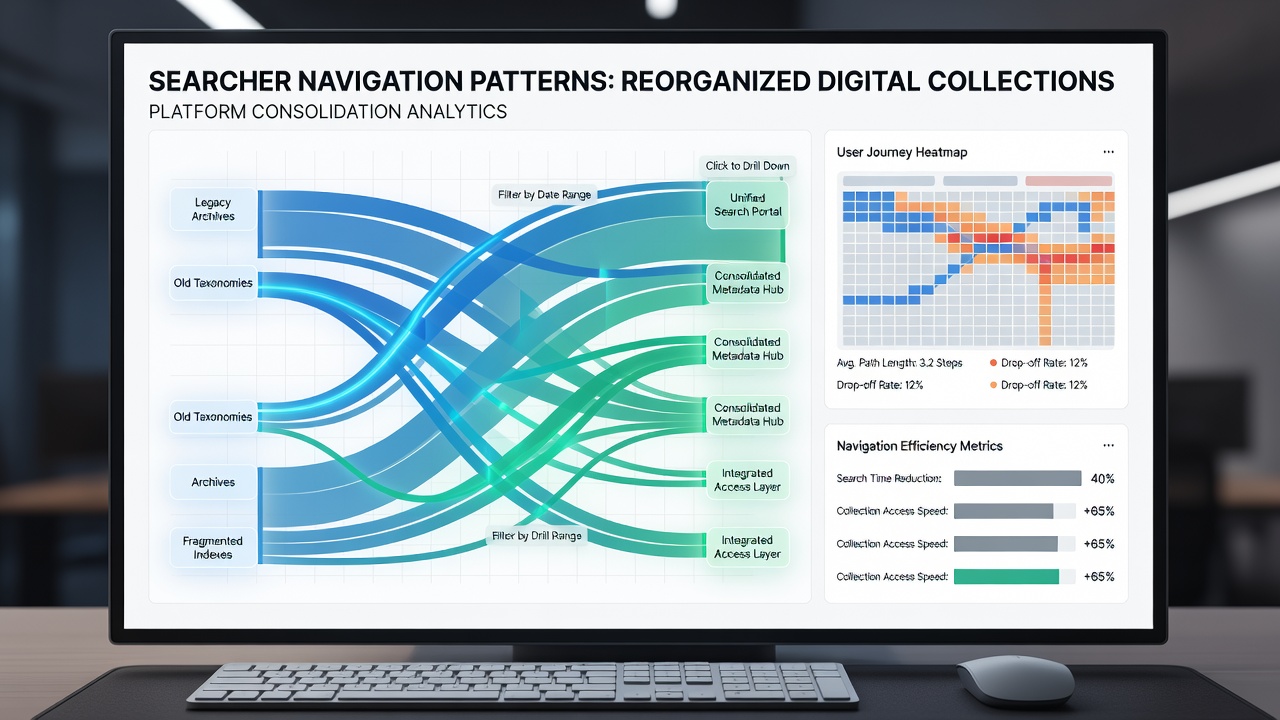
Analysts examine server logs and session recordings to map how searchers move from landing pages through result lists and into individual records once collections sit under one roof. These examinations show that path lengths increase when duplicate records surface from overlapping sources, prompting users to backtrack and compare entries before selecting a destination. Studies conducted on academic platforms indicate that mobile users navigate more linearly than desktop counterparts during consolidation periods, relying on swipe gestures and simplified menus rather than complex sidebar filters that may still reference legacy collection names.
Metadata Alignment Effects on Discovery
Unified metadata standards help searchers locate items across former silos, although incomplete mapping leaves gaps that surface as zero-result queries in the weeks following migration. Evidence from recent consolidations points to improved recall rates once controlled vocabularies stabilize, because cross-collection links appear consistently in related-item carousels and suggested-search features. Those who study these environments find that geographic and temporal facets gain prominence after reorganization, since merged datasets often highlight connections between regional holdings that remained hidden when platforms operated separately.

Session analytics further demonstrate that users adopt new starting points for exploration, beginning with broad topical searches instead of direct item lookups when the platform presents aggregated overviews of combined holdings. Researchers tracking October 2026 activity recorded measurable growth in the use of visual browsing tools, such as timeline sliders and map overlays, as institutions introduced these elements to compensate for disrupted linear catalog structures.
Comparative Patterns Across Sectors
Government archives, university libraries, and cultural heritage sites each display distinct navigation responses during consolidation, shaped by their respective user bases and content types. Academic searchers tend to retain higher rates of Boolean query construction even after interface changes, whereas public users shift toward natural language inputs that leverage improved semantic search layers added during the merger. Library of Congress reports document how cross-institutional projects in North America produced similar shifts in navigation depth, with users drilling further into result sets once duplicate detection improved. European research initiatives meanwhile highlight parallel developments, where combined digital heritage portals encouraged longer exploration chains supported by linked open data connections.
Measurement Techniques and Emerging Metrics
Teams evaluate navigation success through a combination of traditional web analytics and specialized digital collection tools that capture facet interactions and export behaviors. Heatmap overlays on search interfaces reveal concentration around newly prominent result cards, while A/B testing compares navigation efficiency before and after metadata cleanup phases. Observers note that exit rates decline once platforms implement persistent identifiers that survive reorganization, allowing searchers to return directly to items without repeating entire query sequences.
Longer-Term Adaptation Trends
Over successive months, navigation patterns stabilize as searchers internalize the reorganized structure and begin leveraging cross-collection discovery features that consolidation enables. Data shows gradual increases in multi-format result exploration, where users move from textual records to associated images or audiovisual files within the same session. Institutions that publish updated user guides and embed contextual help within result pages accelerate this adaptation, reducing the period during which navigation friction remains elevated. Europeana research summaries indicate that similar patterns emerged across aggregated cultural collections when multiple national platforms converged into unified gateways.
Conclusion
Platform consolidation alters searcher navigation through reorganized digital collections by changing entry points, result structures, and cross-referencing capabilities, yet measurable adaptation occurs as metadata stabilizes and interface elements evolve. Continued monitoring through log analysis and session tracking supplies the evidence needed to understand these shifts, allowing institutions to refine access methods in response to documented user behaviors across different sectors and regions.